Khel
PUBLIC SPACE DESIGNThe goal behind this project was to augment existing pedagogy by devising experiential learning spaces that are integrated with 'play'. Khel attempts to delve into this inquiry by designing a mathematical park in a historically significant site- Sir CV Raman's House in Bangalore.
Drawing inspiration from David Sobel's book 'Childhood and Nature', Children's books such as 'Alice in Wonderland', and the physics adaptation 'Alice in Quantumland' and Nature the aim is to envision a space that a child can autonomously explore while being encouraged to imagine, think creatively and learn organically
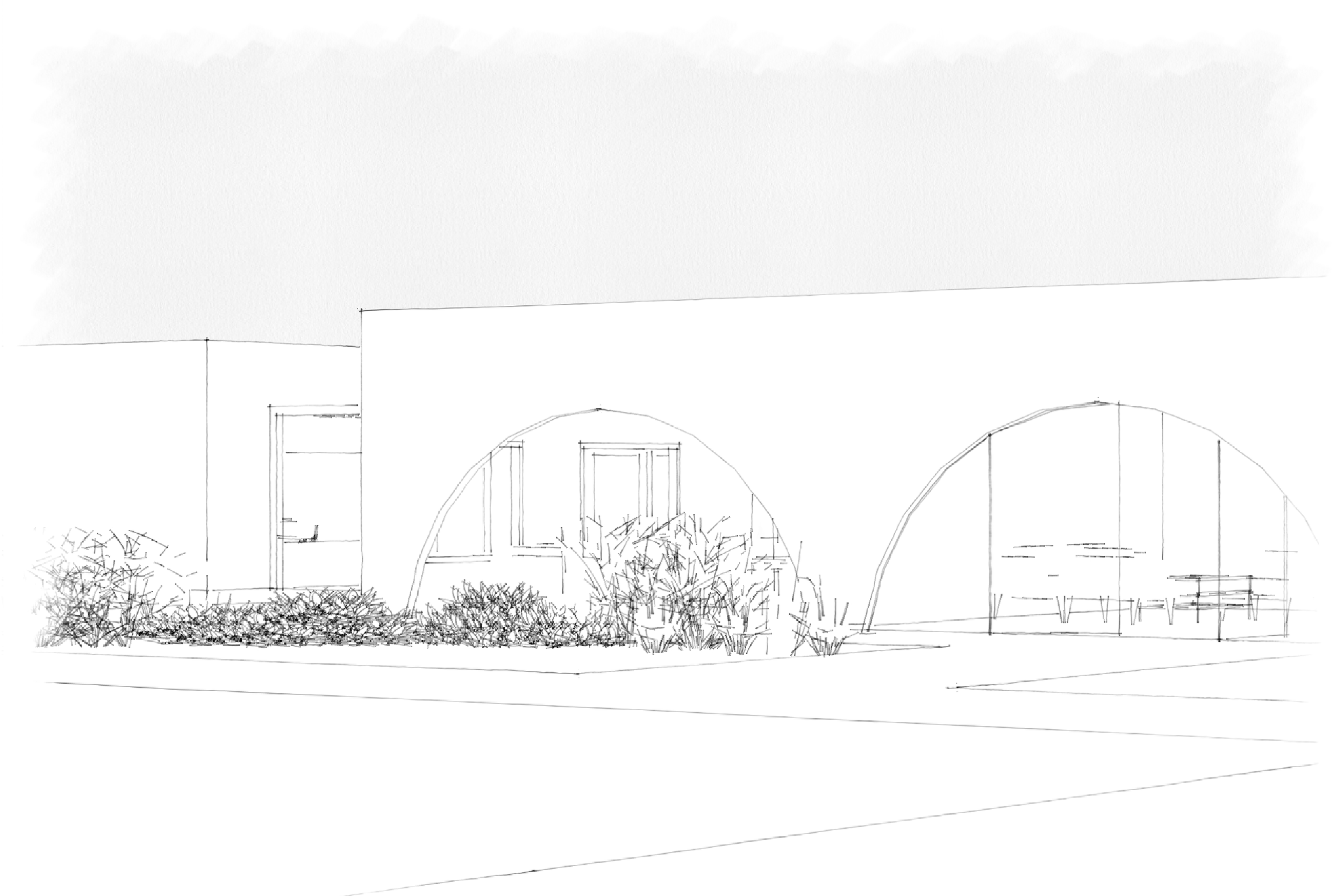
EXPERIENTIAL DESIGN
|
PUBLIC SPACE DESIGN
|
EXPERIENTIAL LEARNING
|
HERITAGE SITE
|
PARK DESIGN
|
EXPERIENTIAL DESIGN | PUBLIC SPACE DESIGN | EXPERIENTIAL LEARNING | HERITAGE SITE | PARK DESIGN |
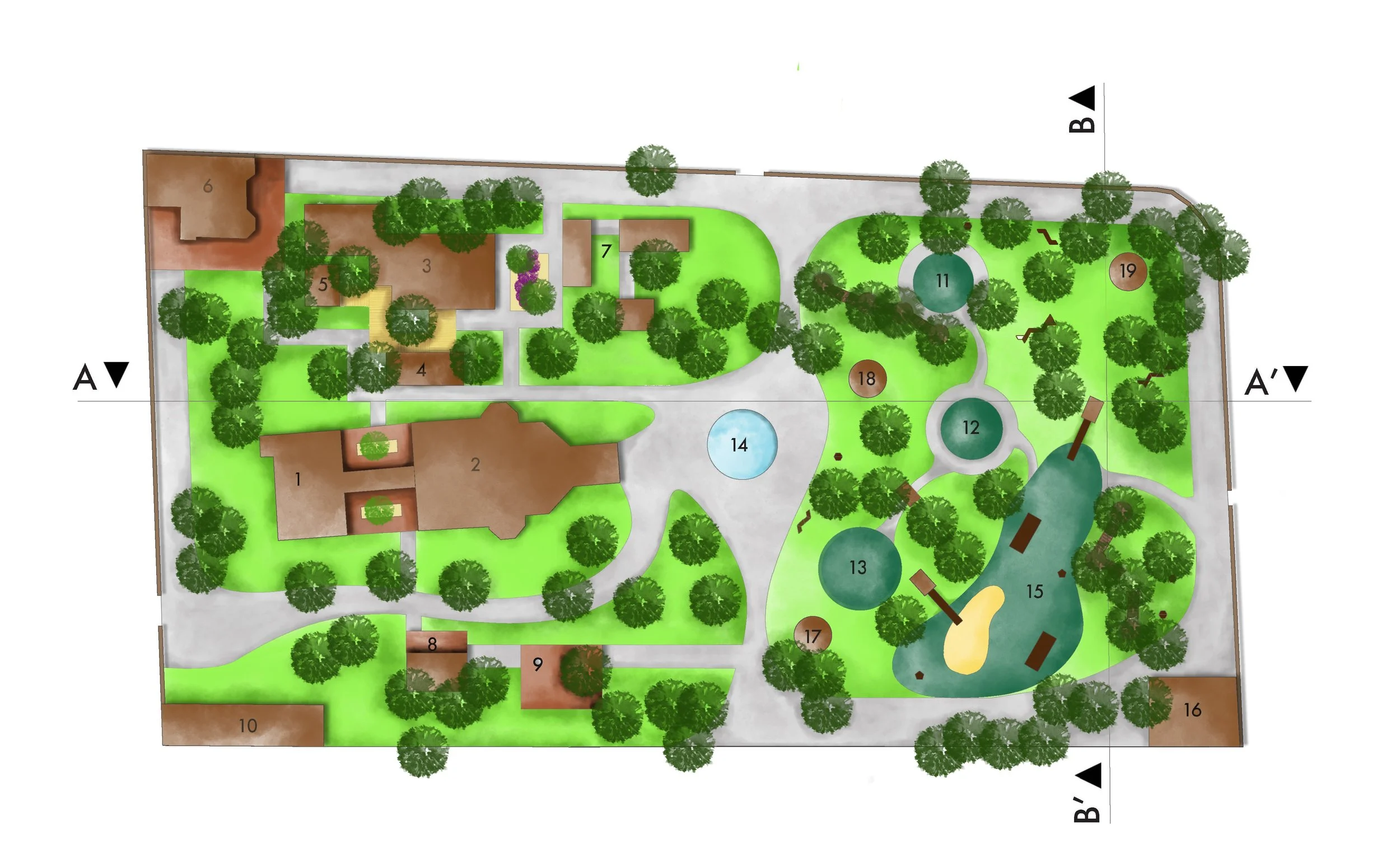
MASTER PLAN
Think Tac office
Visitor’s center
Administration office
Meeting room
Director’s office
Raman Research Institute Office
C.V. Raman exhibit space
Cafe
Outdoor seating
Service building
Zome construction zone
Tensegrity zone
Froebel’s zone
Wave water body
Free play zone
Bathrooms
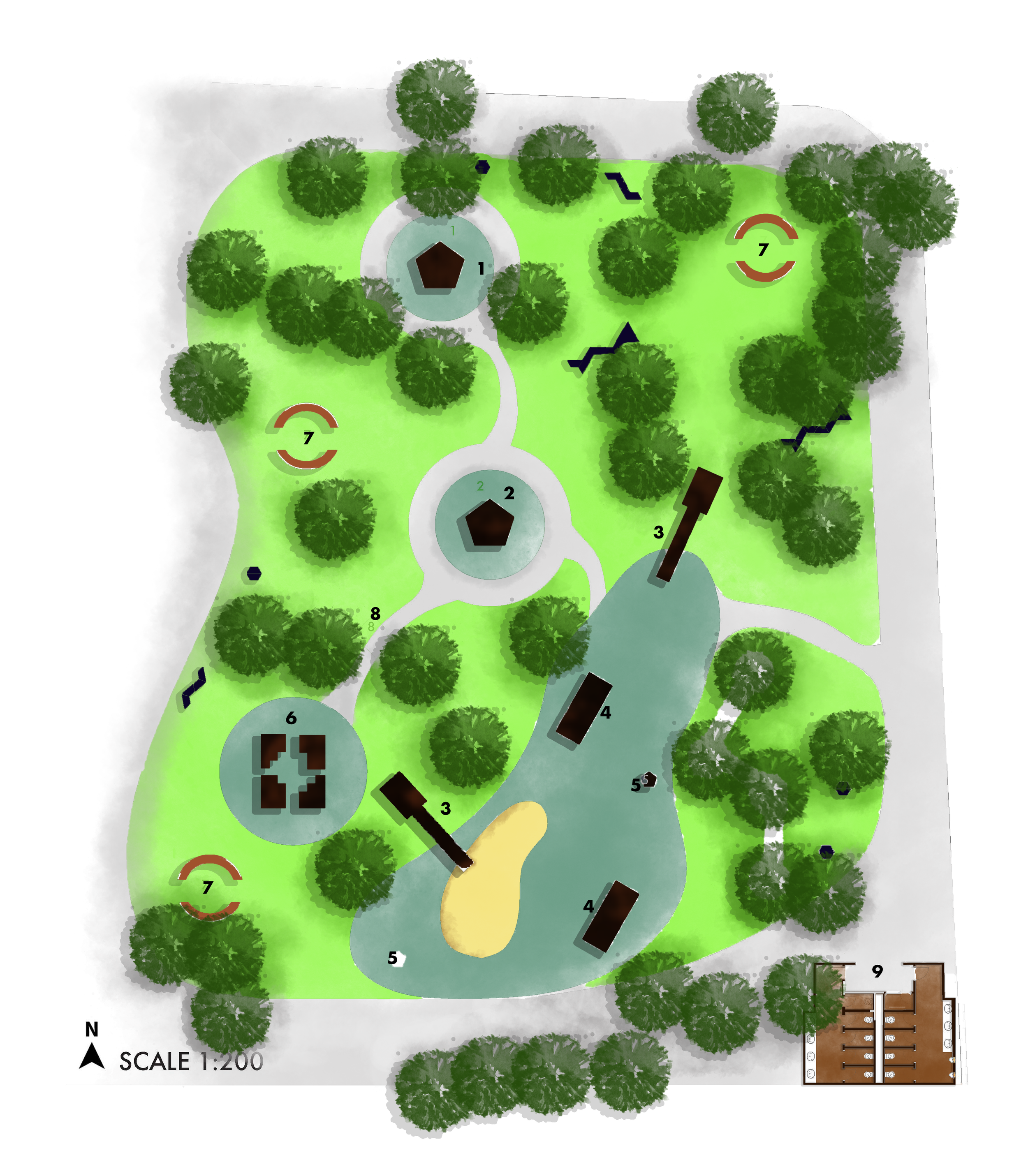
PARK DETAIL
The park is a key part of the proposed design program. It intends to be the space that fosters both play and learning. In order to do so, the design proposes a combination of playable installations and fixtures set in an unstructured space that encourages wild play. The program includes the following:
Tensegrity zone: A climbable structure that draws inspiration of tensegrity objects
Zome construction zone: A space designed by drawing inspiration from zome construction toys. Here the individual spokes and joints are designed to be larger so the children can build large, playable sculptures.
Tunnel slides: That connec wilder zones to the open play space adding whimsy to transitional spaces.
Swingsets: The trusty old swing is not just a playground favourite, this practical example of a pendulum demonstrates fundamental physics concepts like gravity, kinetic energy and potential energy.
Merry-go-round: Another playground favourite that celebrates the principle of centripetal force
Froebel’s zone: Inspired by the Froebel blocks, this zone is designed to teach concepts of shape, balance and structure.
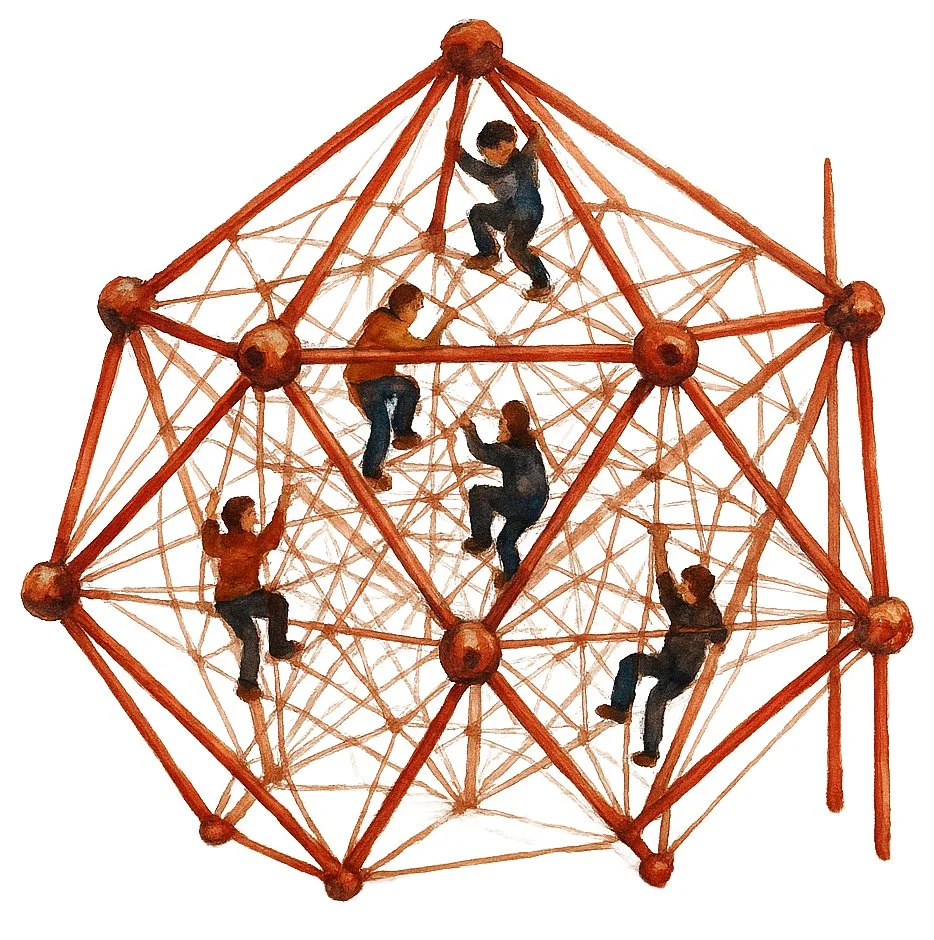
Tensegrity zone
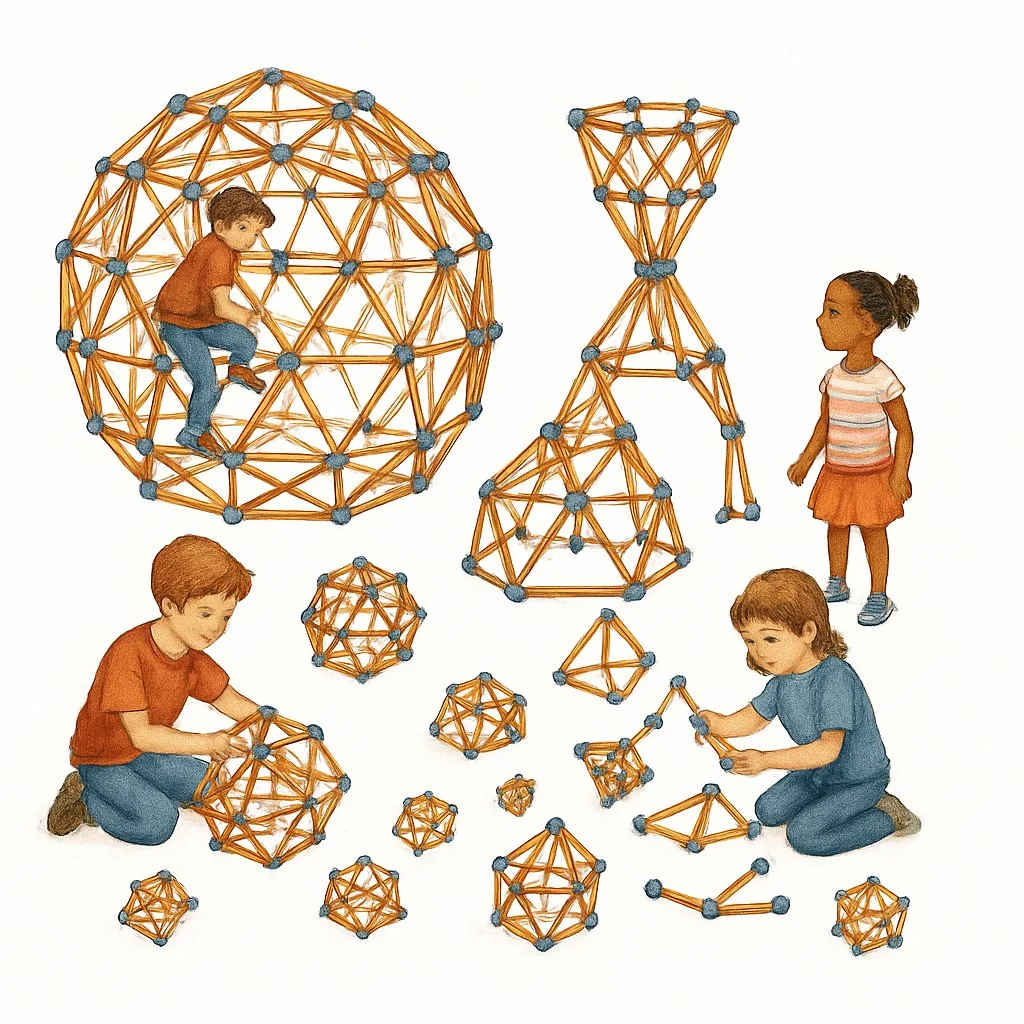
Zome construction zone
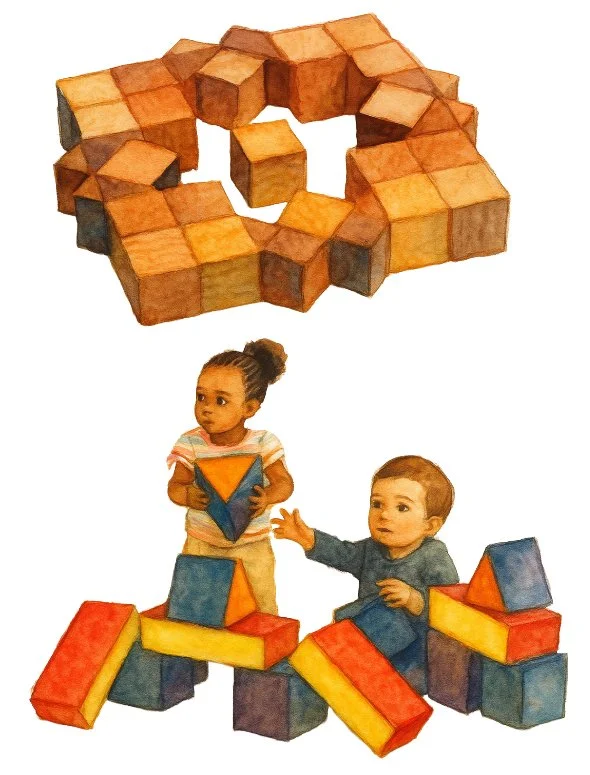
Froebel’s zone
ADMINISTRATION OFFICE
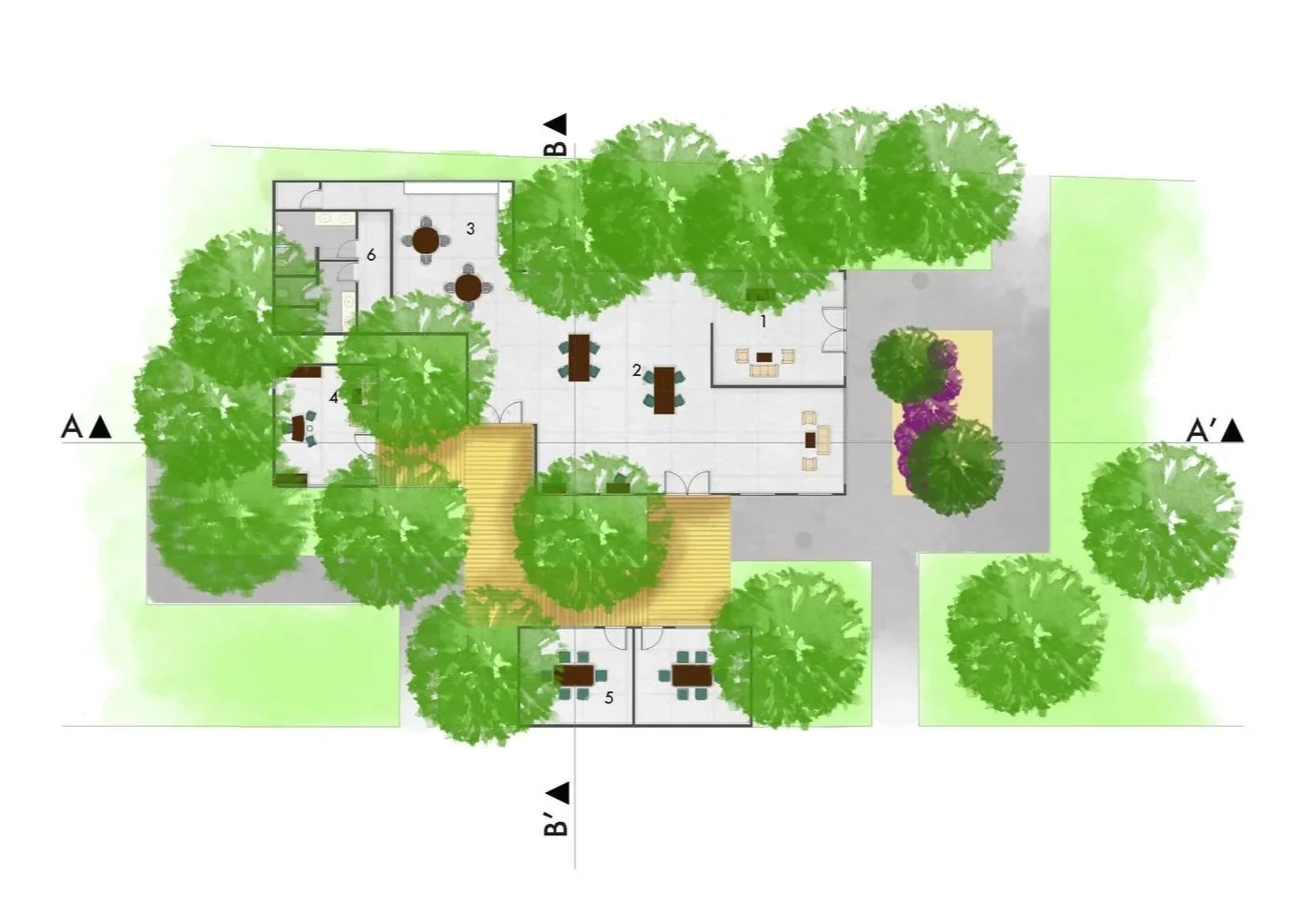
The administration Office is designed to support the employees intended to handle the daily functioning of the park as well as manage the temporal uses of the CV Raman House and Exhibition Spaces.
I found it important to retain the natural foliage and design the space to camouflage into its surroundings, therefore the structure is a simple single-storey space that is broken into smaller connected spaces designed around the existing trees.
1. Reception Area
2. Workspace
3. Cafeteria
4. Director's Office
5. Meeting Rooms
Innovation & Visitor’s Center
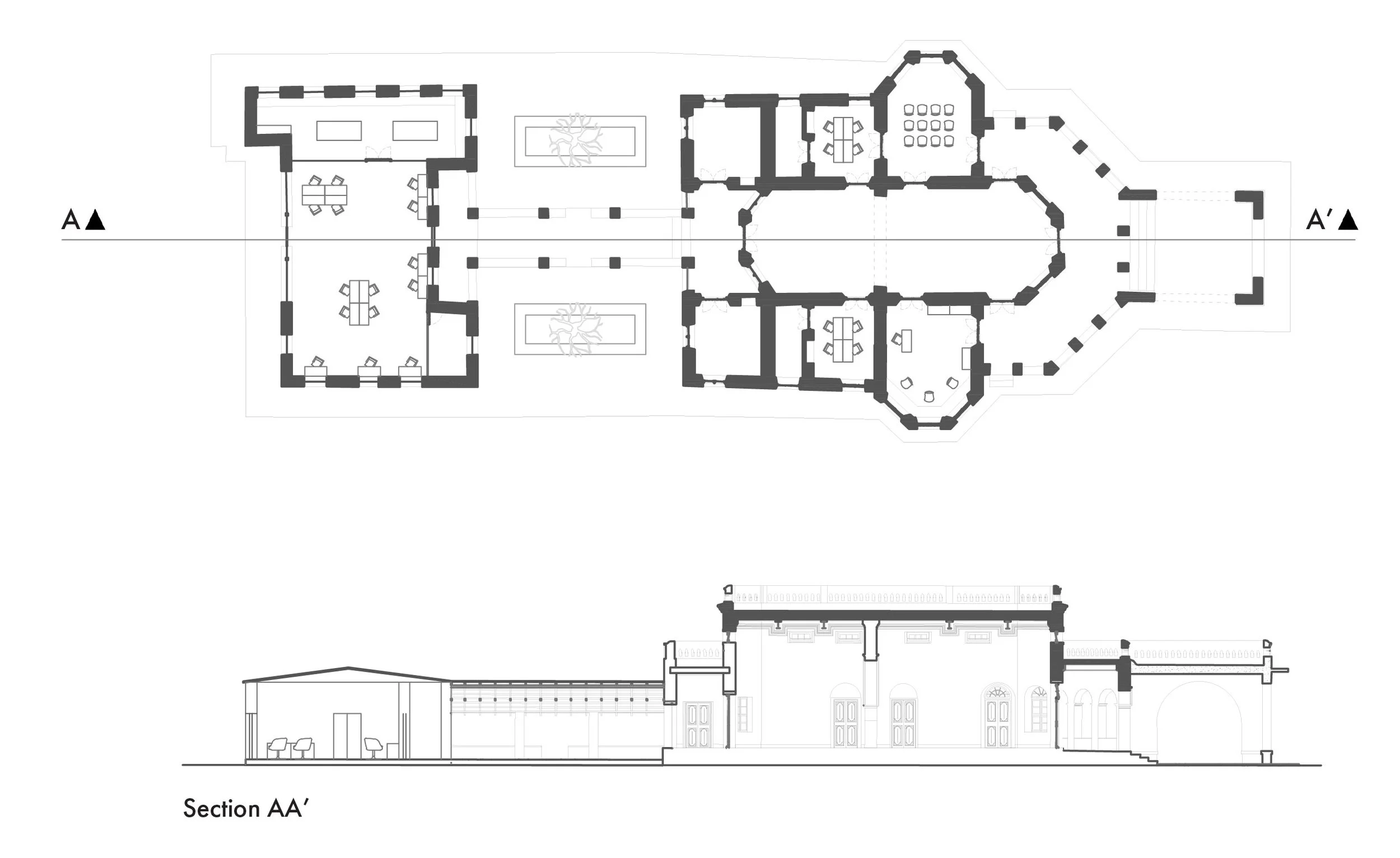
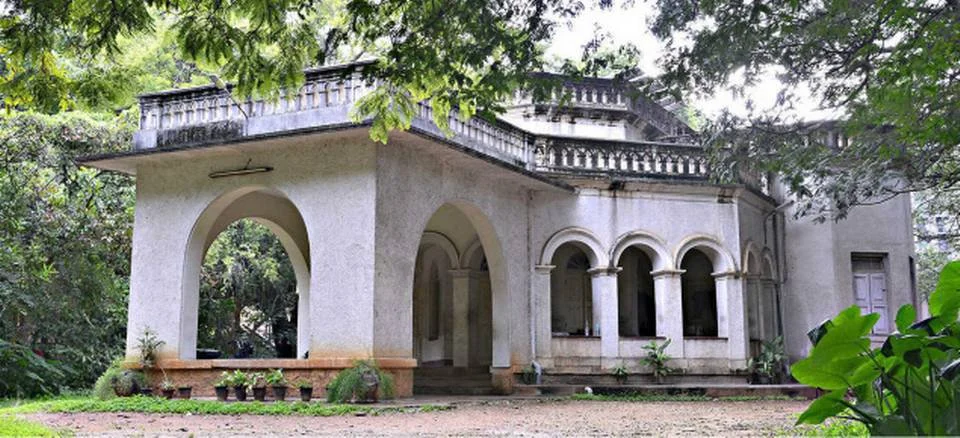
The innovation and visitors center is designed to be housed in the structure that was once Sir C.V. Raman’s home.
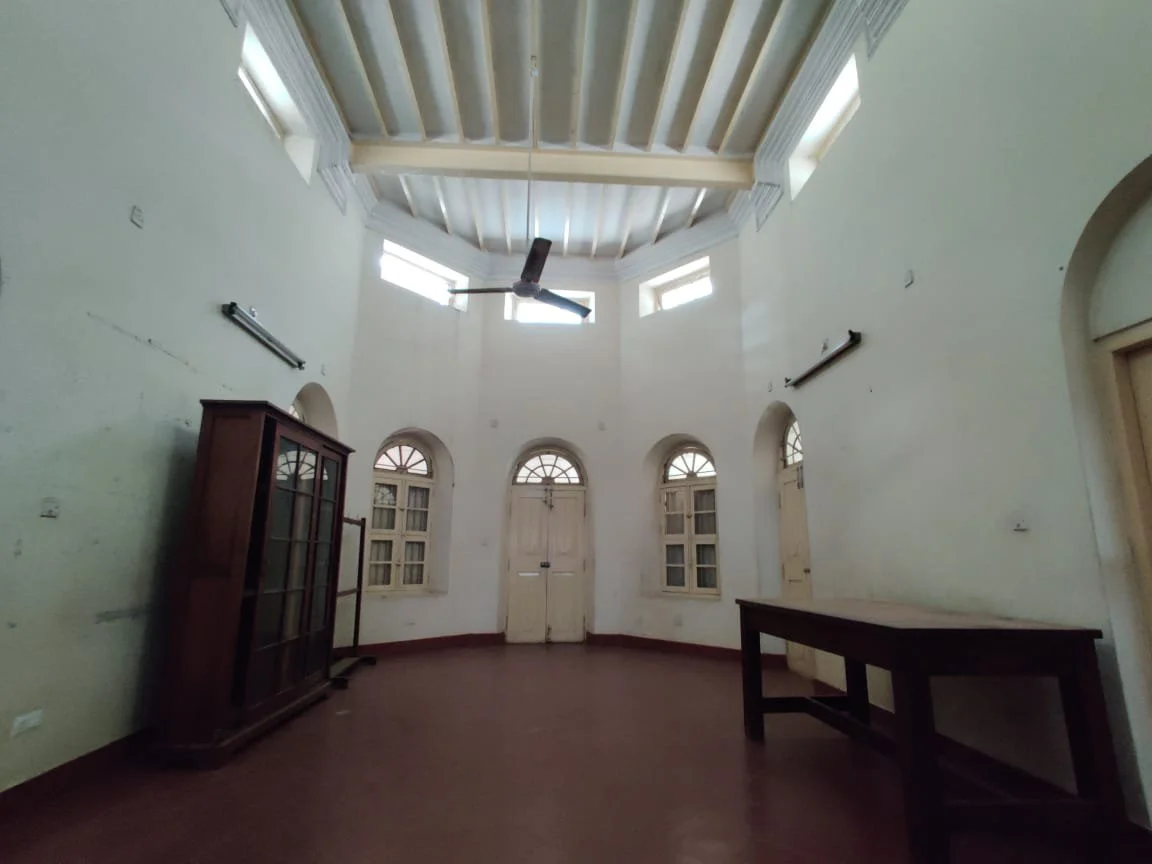
The program looks to encourage innovation and pedagogy in the field of math and physics, and therefore includes a space for screenings and talks, a library, math labs, and exhibition spaces.
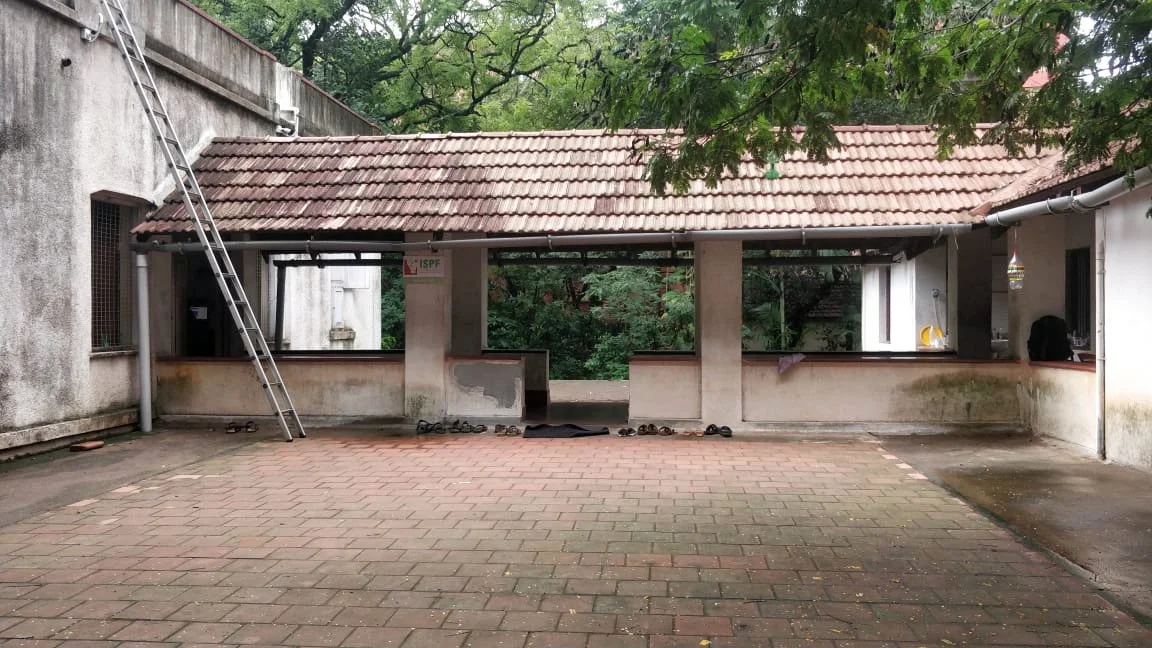
The secondary structure at the back, once a kitchen, is redesigned to better support the NGO Think Tac that presently operates from the site.
Key elements:
Think Tac office & Recording room
Library and bookstore
Math Labs
AV rooms
Exhibition spaces
Meeting rooms
The brief
To design an experiential learning environment that integrates play with pedagogy, reimagining educational engagement through a mathematical park located at the historically significant site of Sir C.V. Raman’s House in Bangalore.
-
How can learning environments move beyond conventional classroom structures to encourage children to explore, imagine, and engage with mathematical and scientific concepts through self-directed play and discovery?
-
Children learn most intuitively when curiosity, movement, storytelling, and exploration become part of the educational experience. Spaces that blur the boundaries between play and learning can foster deeper engagement, creativity, and independent thinking.
-
Inspired by David Sobel’s Childhood and Nature, Alice in Wonderland, Alice in Quantumland, and the exploratory patterns found in nature, the project sought to create an immersive landscape where children could autonomously navigate, interact, and organically encounter mathematical ideas through play-based experiences.
-
Khel emerged as an experiential mathematical park that transforms learning into an exploratory journey— encouraging imagination, creative inquiry, and intuitive understanding through a playful and spatially immersive environment rooted in discovery.